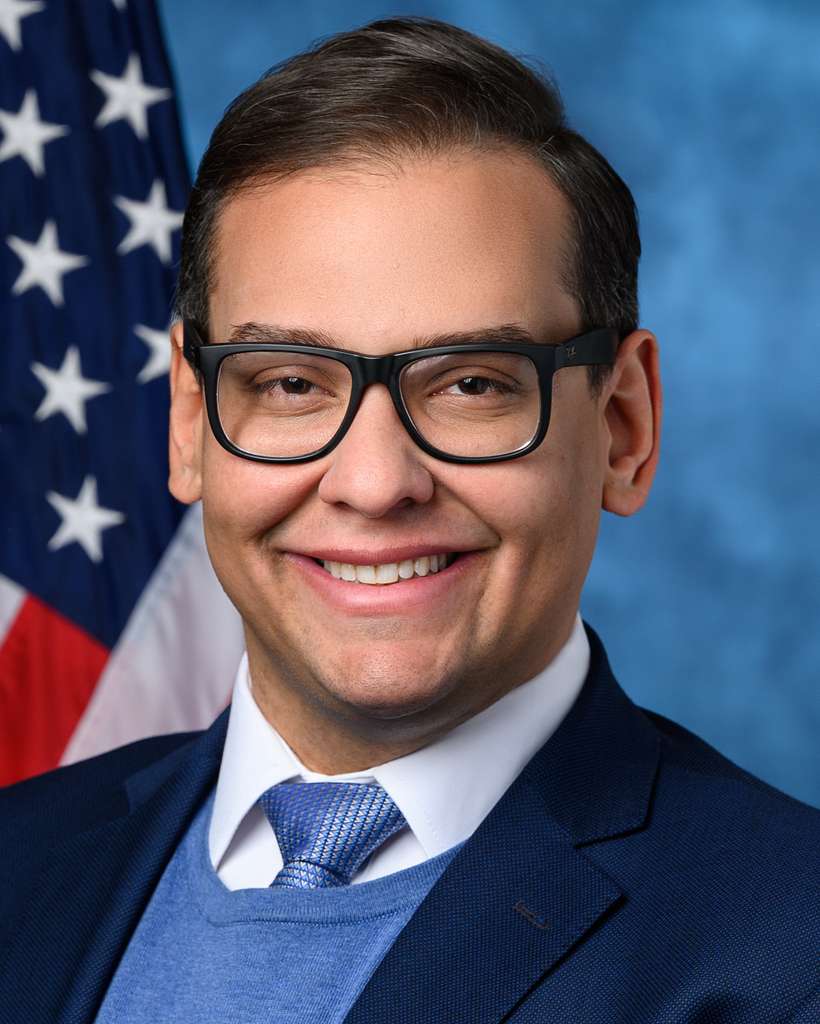
Madison White, Contributing Member 2023-2024
Intellectual Property and Computer Law Journal
I. Introduction
Prior to the digital age, superfans wanting to meet their favorite celebrities could only dream of an opportunity to hear their idols speak to them directly. While 1960s Beatlemania only allowed fans to catch a glimpse of their favorite band on television, the internet and social media have reduced the degrees of separation between celebrities and their admirers. In the 21st century, Taylor Swift can directly respond to a fan’s TikTok video, or Nicki Minaj might engage in conversations on X with her listeners. The internet has arguably democratized access to formerly untouchable elites by opening a window of engagement with the public.
If social media has created demand for celebrity interaction with everyday people, Cameo has provided a marketplace for such communication. Cameo is a website in which users pay varied fees in exchange for personalized videos from their favorite celebrities.[1] Celebrities create profiles on the platform to take requests for personalized videos and have seven days to respond to a user’s request if they choose to accept.[2] For example, a recent law school graduate could submit a request for Rudy Giuliani to provide legal career advice for a starting price of $325.[3] A creative daughter could pay Chuck Norris $450 to wish her martial arts-fanatic father a happy birthday.[4] The platform appears to be mutually beneficial for both celebrities and users willing to shell out hundreds of dollars for the videos. Cameo has provided celebrities an additional revenue source, which can be particularly advantageous if jobs run dry. During the 2023 SAG-AFTRA strike, in which over 160,000 actors refused to work for Hollywood companies for several weeks due to wage issues,[5] Cameo increased its supply of celebrities by 137%.[6]
Cameo recipients sometimes post their successful requests on social media for the public to see. After former Congressman George Santos was expelled from the House of Representatives amidst his indictment on criminal charges for wire fraud, money laundering, and making false statements to Congress,[7] he quickly found a new source of income on Cameo.[8] Santos created several videos on the platform complying with customers’ highly specific requests for a modest $500 each.[9] In one Cameo, Santos tells his recipient,
“Hey, Suzanne! Just wanted to congratulate you on finally transporting your dead husband’s spirit into a mannequin. I know you tried for years, but you finally got the right person to help you, and I’m so glad that you did… I want to wish you and Jacob the best Christmas since death will never keep you guys apart ever again!”[10]
Mr. Santos claims he has earned nearly $500,000 on the platform since his Congressional expulsion.[11]
As George Santos’ Cameos gained internet popularity, he received more prank requests. Talk show host Jimmy Kimmel hosted a segment on his late-night comedy show titled “Will Santos Say It?” in which he submitted several ridiculous requests to see if Santos would follow through with making the video.[12] Santos complied with multiple requests, including one in which he states, “I just wanted to stop by to congratulate you for winning the Clearwater, Florida beef eating contest. Eating six pounds of loose ground beef in under 30 minutes is an all-time new record, which is amazing and impressive!”[13]
However, George Santos did not appreciate Kimmel’s prank. Five days after Kimmel’s first installment of the “Will Santos Say It?” segment, Mr. Santos’ attorneys sent Kimmel a cease-and-desist letter demanding the content’s removal from the internet. [14] The video received 1.4 million views in three days.[15] According to the complaint, Kimmel and his network, ABC, refused to remove the videos from social media.[16]
As a result of Jimmy Kimmel’s refusal to remove the clips of Santos’ Cameos, George Santos filed a lawsuit in the U.S. District Court Southern District of New York against Kimmel, ABC, and its parent company, Disney, on February 17, 2024 for copyright infringement, fraudulent inducement, breach of contract, and unjust enrichment.[17] Santos’ attorney, Andrew Mancilla, told press that Kimmel’s prank was “based on manipulation and exploitation.”[18] This article covers the legal background of intellectual property rights for Cameo videos and how a court might rule on Santos’ copyright infringement claims.
II. Legal Background for Santos’ Claims
Fraudulent Inducement
Fraudulent inducement claims only arise within the contractual context.[19] Such claims require plaintiffs to demonstrate that (1) the defendant made a material misrepresentation; (2) the defendant knew the representation was false; (3) the defendant intended the plaintiff to rely on the misrepresentation; (4) the plaintiff did rely on the misrepresentation; and (5) the plaintiff’s reliance caused injury.[20] Since fraudulent inducement is a contractual issue, the plaintiff’s reliance on the misrepresentation induces the plaintiff to enter into a contract he otherwise would not have accepted.[21]
Copyright Infringement
Under federal copyright law, the owner of a copyright has exclusive rights to reproduce and distribute their work and create derivative works based on the original copyrighted piece.[22] In cases of infringement, reproduction can involve duplicating, imitating, or simulating the original copyrighted work in whole or in part.[23] Even in circumstances where a secondary work widely varies from the copyrighted work, infringement could still take place if the author’s expression of ideas has been incorporated into the infringing piece.[24]
In copyright law, ideas alone are not eligible for copyright protection, but the author’s expression of ideas can be copyrighted.[25] For example, the mere idea of writing a melancholic breakup song cannot be protected under copyright, but the composition of a song expressing a breakup, such as “Maybe we got lost in translation/maybe I asked for too much/but maybe this thing was a masterpiece, ‘til you tore it all up,”[26] would be protected because the lyrics, melody, and artistic choices are unique to the author. [27]
Additionally, copyright owners possess the exclusive right of publication.[28] Consequently, the copyright owner has the right to control the public distribution of the work, so unauthorized individuals distributing the copyrighted material to the public would constitute unlawful infringement.[29]
When faced with copyright infringement suits, defendants often invoke the fair use defense. The Copyright Act creates an exception for unauthorized use of an otherwise protected work if the defendant can demonstrate that the usage is “fair.”[30] Under the federal statute, reproducing a copyrighted work “for purposes such as criticism, comment, news reporting, teaching… scholarship, or research” is not infringement.[31] The statute instructs courts to consider four factors to determine whether the use was fair: (1) the purpose of the use, including whether the use is commercial or for nonprofit educational purposes; (2) the nature of the copyrighted work; (3) the amount and substantiality of the portion used in relation to the copyrighted work as a whole; and (4) the effect of the use upon the potential market for or value of the copyrighted work.[32] Comedy shows are no stranger to copyright infringement lawsuits, but fair use claims are highly fact-specific. For example, defendant “The Daily Show” in Kane v. Comedy Partners succeeded on its fair use defense when it used a brief clip from a public access television show in a satirical segment.[33] The court held that the clip constituted fair use because it was used as a critical examination of the copyright holder’s work, the clip was a small percentage of the overall television show, and showing the clip was unlikely to negatively impact the television show’s market.[34]
III. Santos v. Kimmel
As stated above, George Santos is suing Jimmy Kimmel for copyright infringement, among other claims.[35] Santos’ arguments hinge on Cameo’s Terms of Service, which grant authorship to video creators.[36]
The Cameo Terms of Service clarify that site users who purchase a “Cameo” are not buying the actual video; rather, customers receive a license to use the video in a limited capacity.[37] The terms of the video licenses assert that the user’s limited rights extend solely to their personal and non-commercial uses, so customers may share the videos they received, but they shall not profit from their distribution.[38] Cameo also requires customers to agree that the “talent” that made the video is the owner of the content.[39]
Santos’ complaint states that Kimmel submitted at least fourteen Cameo requests using fake names and narratives.[40] He enumerates the fake requests to support his claim of fraudulent inducement.[41] For example, one of Kimmel’s requests, posing as “Uncle Joe,” requested “…(C)an you please congratulate my legally blind niece…on passing her driving test… the day after she got her license, she got in a really bad car accident so if you could also wish her a speedy recovery…”[42] Santos argues that he reasonably relied on Kimmel’s misrepresentations and the fake requests induced him to provide the Cameo videos.[43] Notably, Santos claims that “as a direct and proximate result of (Kimmel’s) fraudulent inducement,” he has suffered monetary damages.[44] The complaint does not explain how getting paid to make the videos, even under false pretenses, has imposed monetary damages on Mr. Santos.[45] Given Mr. Santos’ outlandish Cameos for other customers, he seemed willing to enter into Cameo contracts based on obviously false requests.
Santos argues that Mr. Kimmel unlawfully infringed the copyright of his Cameos by broadcasting them on national television for a commercial purpose.[46] The complaint points to “Santos using his own effort, creativity, and unique personality traits, to generate an inspiring message”[47] to support his claim that the videos were the product of Santos’ expression and thus protectible under copyright.[48] Santos states that Kimmel reproduced, distributed, and publicly displayed the videos without his permission[49] and that the alleged infringement was intentional because Kimmel admitted on his show that the scheme was a prank.[50]
The complaint further alleges that Jimmy Kimmel, ABC, and Disney profited from the unauthorized use of Santos’ Cameos without providing compensation, and that Mr. Santos has sustained substantial injury as a result.[51] The complaint does not specify how Santos has been injured by Kimmel’s alleged actions. Santos could likely argue that both Kimmel and the network profited from the Cameos because of the increased viewership of the show as a result of the popularity of the “Will Santos Say It?” segment.
At the time of this writing, Jimmy Kimmel has not responded to the lawsuit with a filed response, but he has made light of the lawsuit on his television show, stating, “I am currently embroiled in what may be the most preposterous lawsuit of all time. George Santos, a man Republicans kicked out of Congress for being a fraud, is suing me for fraud.”[52]
A court could find in favor of George Santos’ copyright infringement claim because of the unauthorized publication of his Cameos. Since Cameo identifies Mr. Santos as the owner of the videos, he possesses the publication right. In response, Jimmy Kimmel might raise a fair use defense to the lawsuit, but the factors illustrated in the statute may not weigh in his favor. Kimmel played the entire Cameos on his show, and the exclusive and individualized nature of Cameos could suggest that airing them on national television impinges on their market value. As Mr. Santos argues in his complaint,[53] Kimmel and ABC profited from airing the Cameos because of advertising revenue from the substantial viewership, so Kimmel’s purpose weighs more commercial than educational.[54]
IV. Conclusion
George Santos’ lawsuit against Jimmy Kimmel has yet to be decided, but it suggests a new legal conundrum in the social media age surrounding the ease of saving online videos and the speed in which third parties can reproduce copyrighted material. Mr. Santos presents a compelling argument for copyright infringement, and Mr. Kimmel could face an uphill battle if he asserts the fair use defense.
[1] Cameo, https://www.cameo.com/about.
[2] Id.
[3] Rudy Guiliani, https://www.cameo.com/rudygiuliani?aaQueryId=0724549e5b6426e8f3a90fc8b5d0c15d.
[4] Chuck Norris, https://www.cameo.com/chucknorris?aaQueryId=1ac2003f756683b76b18ae0834b1d0b1.
[5] Reed Alexander & Alison Brower, Why Hollywood Actors and Writers are Still on Strike, What SAG-AFTRA and the WGA are Fighting for, and How the Walkouts are Upending Entertainment, Business Insider (Sep. 5, 2023), https://www.businessinsider.com/why-sag-aftra-actors-wga-writers-unions-strike-hollywood.
[6] Kai Xiang Teo, The SAG-AFTRA Strike is the Best Thing to Happen to Cameo, the Short-Video App Where Celebs Get Paid to Make Clips for Fans, Since the Lockdowns, Business Insider (Aug. 28, 2023), https://www.businessinsider.com/hollywood-strikes-cameo-app-biggest-boost-celebrities-since-covid-19-2023-8.
[7] Eric McDaniel, New York Republican George Santos Expelled from Congress, NPR (Dec. 1, 2023), https://www.npr.org/2023/12/01/1215899764/george-santos-expulsion-house.
[8] Gloria Oladipo, George Santos Says He Has Sold 1,200 Videos on Cameo, The Guardian (Feb. 5, 2024), https://www.theguardian.com/us-news/2024/feb/05/george-santos-cameo-money.
[9] Olivia Craighead, Everyone Wants a George Santos Cameo for Christmas, Apparently, The Cut (Dec. 4, 2023), https://www.thecut.com/2023/12/george-santos-has-joined-cameo.html.
[10] Id.
[11] Oladipo supra note 8.
[12] Jimmy Kimmel Live, Jimmy Kimmel. Pranks George Santos on Cameo, Trump Wants “Loyalists” Only & the Chanucorn Returns!, YouTube (Dec. 7, 2023), https://www.youtube.com/watch?v=iyoRHDkJKlo.
[13] Id.
[14] Compl. ¶ 31, Santos v. Kimmel, No. 1:24-cv-10210 (S.D.N.Y. Feb. 17, 2024).
[15] Id.
[16] Id. at ¶ 7 & 8.
[17] Id. ¶ 53.
[18] Daniel Wu, George Santos Sues Jimmy Kimmel for Duping Him into Making Cameo Videos, The Washington Post (Feb. 18, 2024), https://www.washingtonpost.com/style/2024/02/18/santos-kimmel-cameo-lawsuit/.
[19] IBM v. Lufkin Indus., LLC, 573 S.W.3d 224, 228 (2019)
[20] Id.
[21] Id.
[22] 17 U.S.C. § 106.
[23] House Report No. 94-1476.
[24] Id.
[25] See Feist Publ’ns, Inc. v. Rural Tel. Serv. Co., 499 U.S. 340, 363 (1991).
[26] Taylor Swift, All Too Well (Taylor’s Version), on Red (Taylor’s Version), (Universal Music Group, 2021).
[27] Feist supra note 25.
[28] § 106 supra note 22.
[29] House Report supra note 23.
[30] 17 USCS § 107
[31] Id.
[32] Id.
[33] Kane v. Comedy Partners, No. 00-Civ-158, 2003 U.S. Dist. LEXIS 18513 (S.D.N.Y. Oct. 16, 2003)
[34] Id. at 18
[35] Compl. supra note 14 at ¶ 53.
[36] Terms of Service, Cameo, https://legal.cameo.com/termsofservice#ownership.
[37] Id.
[38] Id.
[39] Id.
[40] Compl. supra note 14 at ¶ 20.
[41] Id. at ¶ 55.
[42] Id. at ¶ 56.
[43] Id. at ¶ 57.
[44] Id. at ¶ 59.
[45] Id.
[46] Id. at ¶ 63.
[47] Id. at ¶ 36.
[48] Feist supra note 25.
[49] Compl. supra note 14 at ¶ 41.
[50] Id. at ¶ 44.
[51] Id. at ¶ 48.
[52] Shania Russell, Jimmy Kimmel Reacts to ‘Preposterous’ George Santos Lawsuit Over Cameo Videos: ‘This is so Good”, Entertainment Weekly (Feb. 21, 2024), https://ew.com/jimmy-kimmel-reacts-george-santos-lawsuit-over-cameo-videos-8597991.
[53] Compl. supra note 14 at ¶ 63.
[54] Id.
 The University of Cincinnati Intellectual Property and Computer Law Journal
Leave a comment