Ivette Rodriguez Nieves, Contributing Member 2024-2025
Intellectual Property and Computer Law Journal
I. Introduction
More than half of the adults in the United States rely on prescription drugs to manage their health.[1] However, before they can be publicly available, these drugs need to be approved for safety and effectiveness by the United States Food and Drug Administration (FDA).[2] The FDA certifies a medication is safe and effective through a three-phase clinical trial.[3]
Phase 1 trials are small groups of healthy volunteers and/or people with the disease who wish to participate in the controlled study.[4] Usually, it takes several months, and its primary purpose is to address safe dosages to be administered.[5]
Phase 2 trials are much bigger groups of people that could take up to two years to complete research analysis.[6] The primary purpose is to verify efficacy and check for side effects of the medication.[7]
Phase 3 trials are much larger groups of volunteers that range thousands of participants and can take up to four years to reach the primary objective of safety and efficacy.[8]
Thus, research for a drug that seeks market approval under the FDA could take 10-15 years to be completely developed.[9] Considering this time constraint, drug developers cannot enjoy the 20-year protection on market exclusivity if they are granted a patent for such a product, leaving them about 5-10 years to generate revenue and subset sunk costs. However, many companies manufacture generic products that directly infringe on a medication.
In April 2024, the Federal Circuit decided a case where Janssen Pharmaceuticals brought suit against Teva Pharmaceuticals alleging patent infringement of Janssen’s injectable drug treatment for schizophrenia covered in U.S. Patent No. 9,439,906 (‘906 patent).[10] Teva responded to the suit admitting infringement but argued the claims in Janssen’s patent were invalid due to obviousness.[11] The District Court sided with Janssen on this issue, but the case was appealed to the Federal Circuit.[12] In the Federal Circuit, the court vacated the judgment of the claims subjected to obviousness allegations and remanded the case for further proceedings.[13]
Part II will provide a background on what non-obviousness requires and introduce the current common law identifying obviousness. It will also provide an introduction to the pharmaceutical companies and what they do. Part III will discuss the Janssen case and its implications on secondary patents for pharmaceutical products undergoing clinical research. Finally, Part IV will conclude with the author’s perspective and summary of the discussion.
II. Background
Patent Standards
The United States Patent & Trademark Office (USPTO) is the federal agency in charge of granting patents.[14] In the patent process, an applicant submits a patent application to the USPTO that specifically describes the invention and what it does through a subset of claims.[15] The claims in a patent provide the scope of what the inventor intends to include in his invention to be protected.[16] It also defines what others are prohibited from making, selling or distributing.[17] Once the application is submitted, an examiner will evaluate the claims and determine if it meets the criteria required to grant the patent.[18] Under current federal law, for a patent to be granted, an invention must generally meet four requirements: eligible subject matter, novelty, non-obviousness, and adequate specification.[19]
Subject matter
Under the Patent Act, there are two criteria for an invention to have eligible subject matter.[20] First, the invention must fall within a category such as processes, machines, manufactures, and composition of matter.[21] Second, the invention must not be oriented to abstract ideas or laws of nature, i.e. math.[22]
Novelty
Under §102, the Patent Act outlines that to satisfy novelty the invention must have not been disclosed to the public before the filing date of the claimed invention.[23] Therefore, if an invention was made publicly available by disclosing blueprints or distributing information about the invention a year before the filing date, it does not satisfy the novelty requirement.
Non-obviousness
Non-obviousness involves something that is not apparent. Section 103 of the Patent Act states that a patent is not obtainable if the difference between the claimed invention and the prior art would have been obvious before the effective filing date of the claimed invention to a person of ordinary skill in the art to which the invention pertains.[24] Thus, if a person invented a product with alternate qualities that would have been apparent at the time of creation, those qualities cannot be patented.[25]
For example: Simon manufactures a patented product using materials such as wood and resin. These three materials are the only materials included in the claims of the patent. However, at the time of invention, Simon had knowledge that material steel could be used as a substitute for material wood. This substitution is also reasonably known by people skilled in the art, as Simon is. As material wood has increased in scarcity, Simon wants to make a patent that includes the substitution of material wood for steel. However, a patent examiner will most likely find the modification to be obvious and noncompliant with §103.
Specification
Specification provides a description of the invention.[26] It describes how to make the invention, the best mode and how to use such invention as to enable any person skilled in the art to make and use it.[27]Additionally, for these same reasons, obviousness, specification and enablement, a party in a lawsuit can claim a patent is invalid.
Parties of the case
Janssen Pharmaceuticals
Janssen Pharmaceuticals is a global company with more than 30,000 employees dedicated to preventing, treating, curing, and stopping diseases.[28] Janssen is the pharmaceutical division of Johnson & Johnson.[29] Currently, the company focuses on six areas: immunology, infectious disease, neuroscience, oncology, cardiovascular and metabolism, and pulmonary hypertension[30] Recently, the company rebranded and changed its name to Johnson & Johnson Innovative Medicine.[31] However, since the name in suit was entered as Janssen, this article will continue to use the Janssen name to address the party involved.
Teva Pharmaceuticals
Teva Pharmaceuticals is a global company that focuses on generic and specialty medicines.[32] Generic medicines are bioequivalent medications of brand name drugs.[33] One of Teva Pharmaceutical’s goals is to provide the public with access to high quality health solutions that are affordable.[34] Its research and development department is focused on investigating new medicines, devices and combination products that could be used as therapeutics.[35]
Issue of the case
Invega Sustenna Invalidity
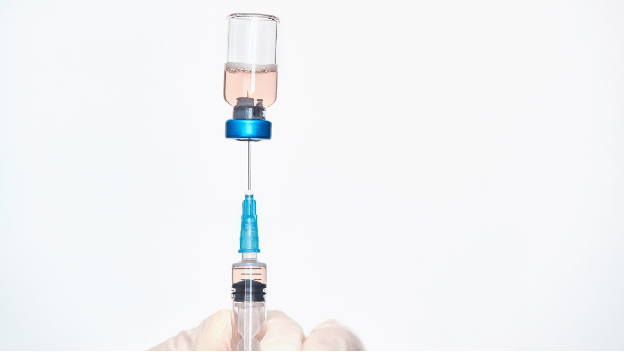
Within its neuroscience focus area, Janssen Pharmaceutical developed a drug called paliperidone palmitate, also known as Invega Sustenna, to help treat schizophrenia in adults.[36] The medication is administered through an injection every six months by a healthcare professional.[37] It received protection under the ‘906 patent.[38]
Teva Pharmaceutical challenged the validity of the Janssen patent. In its argument, Teva raised the question of whether the dosages were obvious. The court specifically took into consideration the following determinations: (1) the scope and content of the prior art, (2) the differences between the claims and the prior art, (3) the level of the person’s ordinary skill in the art, and (4) secondary considerations of non-obviousness.[39]
III. Discussion
Both Teva and Janssen compete in the biopharmaceutical industry.[40] They are direct competitors, with Teva manufacturing generic drugs and medications that directly compete with Janssen. This can cause infringement cases to be more common having the generic product infringe on the brand name product’s patent, especially when devising the bioequivalent formulation of the drug. Even when some special exceptions allow one company to investigate certain drugs for FDA approval under 35 USC 271(e), such protections on infringement are limited.[41]
Before the suit, Teva sent a letter to Janssen Pharmaceuticals on December 2017 notifying the company of an approved New Drug Application (NDA) seeking FDA approval of a generic version of paliperidone palmitate extended-release injectable suspension products.[42]
Janssen brought suit under infringement, where Teva was the alleged infringer.[43] Here, Teva did not argue the infringement allegations.[44] However, Teva challenged the validity of the representative claims of Janssen’s Invega Sustenna patent.[45] In the District Court, Janssen prevailed when the court upheld the patent’s validity. However, Teva appealed to the Federal Circuit and contended the District Court erred in its analysis of non-obviousness.[46]
For the purpose of this article, the focus will be placed on the ‘548 clinical study protocol. A protocol for research studies under a phase trial indicates how the study will be conducted and includes relevant information on the drug being researched. The protocol was published in 2005 and addresses Phase 3 clinical trials[47]. Here, Janssen included different dosage regimens that would be used in the study to verify effectiveness.[48]
On appeal, the Federal Circuit addressed whether the district court’s required showing of obviousness was at odds with the scope of the claims.[49] In this particular category, the court delved further in determining whether the generalized or population-wide dosing was properly analyzed.[50]
Teva argued the District Court improperly added unclaimed limitations when analyzing obviousness in the context of generalized or population-wide dosing.[51] The argument was based on the reliance that the court interpreted the claims of the patent to include a general population instead of the specifications outlined in the claim. The Federal Circuit agreed and cited KSRInt’l Co. v. Teleflex Inc., 550 U.S. 398 (2007), outlining that what matters is the objective scope of the claim. Therefore, when does an invention become obvious when it involves dosages?[52]
Here, the Federal Circuit concluded that for pharmaceuticals and medical device manufacturers, effectiveness standards from the FDA are not necessary to establish obviousness. Because FDA standards are aimed towards generalized studies, it confuses and extrapolates the scope of the claim.[53] The court noted that “some effectiveness in some patients” was sufficient to satisfy obviousness.[54] The court identified that the ‘906 claim only specified “a psychiatric patient. . .” thus, this is the only scope of the claim intended by Janssen.[55] The court reasoned that going beyond the scope of “a psychiatric patient” and including the general study to counter obviousness was too broad and not necessary to prove the claim.[56] Thus, it can be implied that depending on the claim scope, obviousness can be determined by the objective scope of the claim–specifically how pharmaceutical companies broaden or shrink their claims to an individual, a subset of individuals, or generalized populations.[57]
Pharmaceutical companies will now face stricter scrutiny under obviousness.[58] The court agreed with Teva that from the ‘548 protocol, Janssen knew that the dosing was effective for some patients and no new results sustained with evidence or explanation produced a new result.[59]
Thus, if the dosing used in the protocol did not satisfy the requirements of safety and effectiveness and a person skilled in the art knows that adjusting the dosage might be beneficial, patenting the new dosage would be unsuccessful even when results would have been different and favored it to be safe and effective. To be able to patent the new dosage, the patent applicant would have to demonstrate a new kind of result not foreseeable or that could be modified in prior studies.
IV. Conclusion
This decision is likely to inhibit pharmaceutical companies’ ability to apply for secondary patents. This could harm future research and development efforts by making it harder for companies to secure patents. Since research spans for vast amounts of time, recouping all of the costs will likely decline from an economic standpoint. This is more important where there are generic versions of a drug because current law enables pharmacists to switch brand name drugs for generics due to affordability–unless the physician stipulates to only dispatch the brand name medication.
Therefore, the public might see a waterfall effect. With companies possibly contemplating cutting on research and development efforts, we might see less innovation. This directly affects generic manufacturers who strive to find an equivalent medication and offer it for sale at a reduced market price.
It’s possible future patent applications will include language such as: “for general population use in persons who are in need of treatment X for disease X” or “for the safe and effective use. . .” as a strategy to counter the obviousness standard for the pharmaceutical industry.
[1] Prescription Drugs, Georgetown University Health Policy Institute, https://hpi.georgetown.edu/rxdrugs/#:~:text=More%20than%20131%20million%20people,and%20those%20with%20chronic%20conditions [https://perma.cc/T2G9-KFJN].
[2] FDA’s Drug Review Process: Continued, U.S. Food and Drug Administration, https://www.fda.gov/drugs/information-consumers-and-patients-drugs/fdas-drug-review-process-continued [https://perma.cc/94CM-L9VM].
[3] Id.
[4] Id.
[5] Id.
[6] Id.
[7] Id.
[8] Id.
[9] How long does it take to develop a new drug?, MatchTrial, https://matchtrial.health/en/how-long-does-it-take-to-develop-a-new-drug/ [https://perma.cc/E7FT-VTZE].
[10] Janssen Pharmaceuticals, Inc. v. Teva Pharmaceuticals USA, Inc., 97 F.4th 915, 918 (Fed. Cir. 2024).
[11] Id.
[12] Id.
[13] Id.
[14] Patent Process Overview, United States Patent & Trademark Office, https://www.uspto.gov/patents/basics/patent-process-overview [https://perma.cc/JFS3-LMVL].
[15] Patent Claim, Legal Information Institute, https://www.law.cornell.edu/wex/patent_claim [https://perma.cc/EZ7U-UEJD].
[16] Id.
[17] Id.
[18] Id.
[19] 35 U.S.C. § 101 (2024).
[20] Id.
[21] Id.
[22] Id.
[23] 35 U.S.C. § 102 (2024).
[24] 35 U.S.C. § 103 (2024).
[25] Id.
[26] 35 U.S.C. § 112 (2024).
[27] Id.
[28] Our Story, Johnson & Johnson Innovative Medicine, https://www.janssen.com/about/our-story [https://perma.cc/978G-VQ4Q].
[29] Ned Pagliarulo, J&J to phase out Janssen name in corporate rebrand, Biopharmadive (Sept. 15, 2023), https://www.biopharmadive.com/news/janssen-brand-retire-johnson-johnson-innovative-medicine/693744/ [https://perma.cc/P4YV-RS75].
[30] Our Story, supra note 28.
[31] Pagliarulo, supra note 29.
[32] Research & Development, Teva Pharmaceuticals, https://www.tevapharm.com/product-focus/research/ [https://perma.cc/DGZ4-QFQC].
[33] Bioequivalence, U.S. Food & Drug Admin., https://www.fda.gov/animal-veterinary/abbreviated-new-animal-drug-applications/bioequivalence [https://perma.cc/8HSX-EKUN].
[34] Research and Development, supra note 32.
[35] Research and Development, supra note 32.
[36] INVEGA SUSTENNA (paliperidone palmitate), Janssen Pharmaceuticals, Inc., https://www.injectionsforschizophrenia.com/invega-sustenna/ [https://perma.cc/U39F-H9BN].
[37] Id.
[38] Janssen Pharmaceuticals, 97 F.4th at 918.
[39] Id.
[40] Id.
[41] 35 U.S.C. §271 (2025).
[42] Sarah Kurtz, ANDA 211149, U.S. Food and Drug Administration (June 6, 2021), https://www.accessdata.fda.gov/drugsatfda_docs/appletter/2021/211149Orig1s000ltr.pdf [https://perma.cc/TQN9-FXWG].
[43] Janssen Pharmaceuticals, 97 F.4th at 918.
[44] Id.
[45] Id.
[46] Id.
[47] Id. at 922.
[48] Id.
[49] Janssen Pharmaceuticals, 97 F.4th at 924.
[50] Id.
[51] Id. at 925.
[52] Id. at 926.
[53] Id.
[54] Id.
[55] Janssen Pharmaceuticals, 97 F.4th at 926.
[56] Id. at 932.
[57] Id. at 928.
[58] Id.
[59] Id.
 The University of Cincinnati Intellectual Property and Computer Law Journal
Leave a comment