Porter Richards, Contributing Member 2024-2025
Intellectual Property and Computer Law Journal
I. Introduction
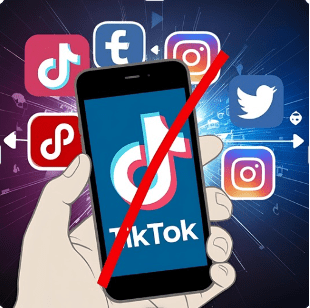
The Protecting Americans from Foreign Adversary Controlled Applications Act (PAFACA) emerges as a flashpoint in the ongoing debate over national security, intellectual property (IP), and the regulation of foreign-controlled technology. Introduced in response to growing concerns about the Chinese-owned social media platform TikTok, PAFACA seeks to restrict the operation of apps controlled by foreign adversaries, citing threats to data privacy and national security.[1] TikTok’s sophisticated recommendation algorithm—widely regarded as the core of its market dominance—has become a focal point of the controversy. While PAFACA directly targets TikTok, it also raises broader questions about the ownership and protection of algorithm-based IP, particularly when such technology is controlled by foreign entities.[2]
This blog examines the intellectual property implications of PAFACA and the broader challenges of protecting algorithm-based IP from foreign control. Even if PAFACA is not passed or if it is significantly altered, the underlying issue—how to regulate and protect proprietary algorithms while balancing national security and open markets—will persist. Part III will explore the intersection of algorithmic IP, trade secrets, and national security, analyzing how U.S. law and policy can adapt to the increasingly strategic nature of algorithms in the digital economy. Finally, Part III proposes a framework for safeguarding algorithmic assets while preserving innovation and global competitiveness.
II. Background
The Legislative and Policy Landscape
Lawmakers introduced PAFACA in response to national security concerns surrounding foreign-controlled apps operating within the U.S.[3] The bill specifically targets platforms like TikTok, whose parent company, ByteDance, is headquartered in China.[4] Lawmakers have expressed concern that the Chinese government could compel ByteDance to provide access to American user data under China’s National Intelligence Law, which requires Chinese companies to cooperate with state intelligence agencies upon request.[5] PAFACA proposes granting the executive branch broad authority to prohibit or regulate apps controlled by foreign adversaries.[6] The bill defines a “foreign adversary” as any country or entity considered hostile to U.S. interests, listing China, Russia, Iran, and North Korea.[7] Key provisions of the bill include granting the President power to ban foreign-controlled apps deemed a national security threat, imposing significant fines and operational restrictions on companies that fail to comply, and regulating not only data privacy and user information but also the underlying technology and algorithms used to curate content.[8]
IP Issues Raised by PAFACA
PAFACA raises significant IP issues, particularly concerning the ownership and protection of algorithms.[9] At the center of the TikTok controversy is its recommendation algorithm, which is widely regarded as the platform’s most valuable asset.[10] TikTok’s algorithm analyzes user behavior, such as viewing time, likes, and comments, to deliver highly personalized content that drives user engagement.[11] This algorithm is likely protected as a trade secret under U.S. law, making it difficult for competitors or regulators to access or replicate.[12] PAFACA effectively targets not only the platform itself but also the underlying algorithm, raising questions about how algorithm-based IP should be treated under both domestic and international law.
The ownership and protection of algorithms present a complex challenge under existing IP frameworks. In the U.S, algorithms can be protected under trade secret law, which safeguards confidential business information that provides a competitive advantage.[13] Under the Defend Trade Secrets Act (DTSA), trade secret protection allows companies to pursue civil remedies for misappropriation.[14] However, trade secret protection, does not prevent the government from demanding access to proprietary algorithms for national security purposes.[15]
Beyond issues related to ownership and protection, the regulation of algorithmic IP also raises enforcement and jurisdictional challenges. PAFACA could force TikTok or similar platforms to disclose algorithmic details to U.S. regulators or modify their operational structures to comply with U.S. security requirements. However, foreign ownership of algorithms complicates this process. TikTok’s algorithm is reportedly developed and maintained by engineers in China, which means that U.S. regulators would face significant legal and diplomatic obstacles in compelling changes to the algorithm’s operation or structure. For instance, China could challenge the U.S. before the World Trade Organization under internation trade agreements that protect trade secret and proprietary technology, such as the Agreement on Trade-Related Aspects of Intellectual Property Rights.
III. Discussion
Broader Implications for Algorithm-Based IP
The issues raised by PAFACA extend beyond TikTok and have broader implications for the protection and regulation of algorithm-based IP in a globalized digital economy. The growing reliance on algorithms to process user data, automate decision-making, and deliver personalized content has made algorithms strategic business assets and potential national security vulnerabilities.[16]
One of the most pressing issues is the potential for foreign ownership of algorithm-based IP to create national security risks.[17] Algorithms that control content curation, user data collection, and predictive modeling could be exploited by foreign adversaries to influence public opinion, conduct surveillance, or gain economic advantages.[18] TikTok’s algorithm, for example, determines the content consumed by millions of Americans daily, raising concerns that the Chinese government could compel ByteDance to manipulate the algorithm to shape political narratives or gather intelligence.[19] Similar concerns have been raised about other Chinese-owned technology firms, such as Huawei and ZTE, whose telecommunications infrastructure could allegedly be used for state-sponsored espionage.[20]
Government oversight of algorithmic IP presents significant legal and policy challenges. Unlike traditional business assets, algorithms are dynamic and highly complex, often relying on machine learning and artificial intelligence (AI) to evolve and improve over time.[21] Regulating the operation or ownership of an algorithm may require access to proprietary source code, training data, and operational metrics—information typically protected as a trade secret.[22] If PAFACA is enacted, the U.S. government would likely face difficulties in monitoring and enforcing compliance without compromising the confidentiality of these trade secrets. Furthermore, foreign entities could restructure their corporate ownership or relocate algorithmic development to jurisdictions beyond U.S. regulatory reach, complicating enforcement efforts.
The sale or transfer of algorithm-based IP also raises significant economic and competitive concerns. If PAFACA compels ByteDance to divest TikTok’s U.S. operations, the fate of the platform’s algorithm becomes a critical issue.[23] A forced sale could result in the algorithm being separated from the platform itself, potentially diminishing TikTok’s competitive edge.[24] Moreover, transferring algorithmic IP to a U.S.-based company raises questions about valuation and access to underlying data sets, essential for maintaining the algorithm’s effectiveness.[25]
Balancing innovation and national security is another key challenge. Overregulation of algorithm-based IP could discourage foreign investment and stifle technological innovation.[26] Many U.S.-based technology firms rely on foreign capital and expertise to develop and refine their algorithms.[27] If PAFACA establishes overly restrictive barriers to foreign ownership or imposes broad government oversight of algorithmic technology, it could create a chilling effect on cross-border technology partnerships and joint ventures.[28] On the other hand, failing to regulate foreign-controlled algorithms could expose U.S. companies and consumers to undue foreign influence and data security risks.[29] Finding a balanced approach that protects national security while fostering innovation will require nuanced regulatory mechanisms and close cooperation between government agencies, technology firms, and international trade partners.[30]
Policy Recommendations and Future Considerations
To address the challenges raised by PAFACA and the broader issue of algorithm-based IP protection, U.S. policymakers should develop a regulatory framework that balances national security concerns with the need to foster innovation and maintain a competitive market. This framework should incorporate lessons from international models while addressing the unique strategic and legal considerations associated with algorithmic technology.
First, strengthening algorithmic IP protection should be a central focus. Existing trade secret laws provide some protection for algorithm-based IP, but additional measures are needed to safeguard algorithms from foreign acquisition and misuse. Congress could expand the scope of the DTSA to cover algorithmic processes and decision-making frameworks, creating a clearer legal pathway for protecting algorithms as proprietary business assets. Additionally, policymakers could establish licensing requirements for transferring algorithm-based IP to foreign entities, similar to the export controls imposed on defense-related technology.
Second, the U.S. should establish a clear regulatory framework for foreign-controlled algorithms through enhanced oversight by the Committee on Foreign Investment in the United States (CFIUS). CFIUS currently reviews foreign acquisitions of U.S. companies that raise national security concerns, but its authority could be expanded to cover licensing agreements and joint ventures involving algorithm-based technology. This would allow regulators to assess the potential national security risks associated with foreign-controlled algorithms without resorting to outright bans or forced divestitures. A targeted review process would provide greater flexibility than PAFACA’s blanket approach, enabling regulators to evaluate algorithmic risks on a case-by-case basis.
Third, the U.S. should promote algorithmic transparency and accountability without compromising trade secret protections. Platforms operating in the U.S. could be required to disclose general information about how their algorithms operate, including ranking factors and content curation practices, while preserving the confidentiality of proprietary source code and training data. A transparency-based model would align more closely with the European Union’s approach under the Digital Markets Act (DMA), ensuring that users retain some control over algorithmic recommendations while protecting competitive advantages for technology firms.
IV. Conclusion
PAFACA underscores the growing tension between national security, IP rights, and the regulation of foreign-controlled technology. While the bill primarily targets TikTok, its broader implications for algorithm-based IP protection, trade secret law, and global competitiveness cannot be overlooked. As algorithms become increasingly central to digital platforms and economic power, the U.S. must develop a nuanced approach that safeguards proprietary technology without stifling innovation or disrupting international trade.
Striking the right balance will require a regulatory framework that enhances trade secret protections, strengthens oversight of foreign-controlled algorithms, and promotes transparency without undermining competitive advantages. Whether PAFACA is enacted or not, the core challenge of protecting algorithmic IP while maintaining an open digital economy will persist. Addressing this issue effectively will demand ongoing collaboration between lawmakers, technology firms, and international partners to ensure that national security measures do not come at the expense of technological progress.
[1] Sarah Filipak, Banning TikTok: Turning point for U.S data security or treat to free speech?, Ohio University, https://www.ohio.edu/news/2025/01/banning-tiktok-turning-point-u-s-data-security-or-threat-free-speech [https://perma.cc/U3QP-6E75].
[2] Id.
[3] Id.
[4] Id.
[5] Id.
[6] Application of Protecting Americans From Foreign Advesary Controlled Applications Act To TikTok, The White House (Jan. 20, 2025), https://www.whitehouse.gov/presidential-actions/2025/01/application-of-protecting-americans-from-foreign-adversary-controlled-applications-act-to-tiktok/ [https://perma.cc/9WTB-MCPM].
[7] H.R. 7521, 118th Cong. (2024).
[8] Id.
[9] Id.
[10] Weifeng Zhong, Who Gets the Algorithm? The Bigger TikTok Danger, Lawfare (May 3, 2023) https://www.lawfaremedia.org/article/who-gets-the-algorithm-the-bigger-tiktok-danger [https://perma.cc/2UU5-VRAE].
[11] Ren Zhou, Understanding the Impact of TikTok’s Recommendation Algorithm on User Engagement, 3 Int’l J. Of Comput. Sci. and Info. Tech. 201 (2024).
[12] Page Grossman, What is a Trade Secret? Definition and Examples, Legalzoom, https://www.legalzoom.com/articles/what-is-a-trade-secret [https://perma.cc/YUL7-K2BJ].
[13] Id.
[14] Bret A Cohen & Nicholas Armington, Explaining the Defend Trade Secrets Act, ABA (Sept. 20, 2016), https://www.americanbar.org/groups/business_law/resources/business-law-today/2016-september/explaining-the-defend-trade-secrets-act/ [https://perma.cc/ST6D-ZUK6].
[15] Id.
[16] Isrshaad Jada & Thembekile Mayayise, The Impact of Artificial Intelligence on Organizational Cyber Security: And Outcome of a Systematic Literature Review, Data and Info. Mgmt. (2024) https://www.sciencedirect.com/science/article/pii/S2543925123000372 [https://perma.cc/FLC5-2WYB].
[17] Zhong, supra note 10.
[18] Id.
[19] Id.
[20] Noah Berman et al., Is China’s Huawei a Threat to U.S National Security?, Council on Foreign Relations (Feb. 8, 2023), https://www.cfr.org/backgrounder/chinas-huawei-threat-us-national-security [https://perma.cc/THM7-9WYS].
[21] Mohsen Soori, Artificial Intelligence, Machine Learning and Deep Learning in Advanced Robotics, a Review, 3 Cognitive Robotics 54-70 (2023).
[22] Zhong, supra note 10.
[23] Kane Wu, ByteDance Prefers TikTok Shutdown in US if Legal Options Fail, Reuters (Apr. 26, 2024), https://www.reuters.com/technology/bytedance-prefers-tiktok-shutdown-us-if-legal-options-fail-sources-say-2024-04-25/ [https://perma.cc/WAH8-C9AQ].
[24] Id.
[25] Id.
[26] Betsy Vereckey, Does Regulation hurt Innovation? This Study Says Yes, MIT Sloan (June 7, 2023), https://mitsloan.mit.edu/ideas-made-to-matter/does-regulation-hurt-innovation-study-says-yes [https://perma.cc/5H36-KDS8].
[27] Klaus E. Meyer, International Business in the Digital Age: Global Strategies in a World of National Intuitions, 54 J. of Int’l Bus. Stud. 577–598 (2023).
[28] Id.
[29] Id.
[30] Id.
 The University of Cincinnati Intellectual Property and Computer Law Journal
Leave a comment