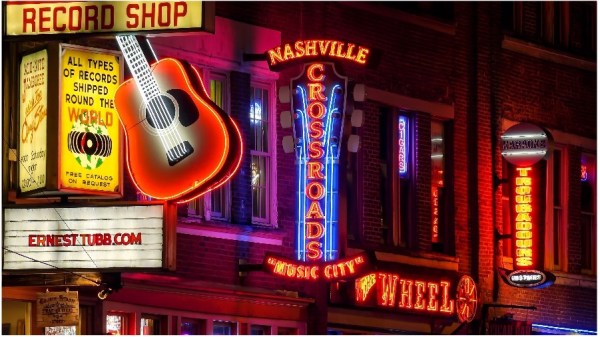
In this article, Magaly Taylor discusses the active role of the Tennessee legislature in protecting an individual’s voice from artificial intelligence in the music industry by enacting the ELVIS Act, and the challenges in enforcing new legislation on evolving technology.
You Wouldn’t Share A Car: The Absurd Possibility of Criminalizing Password Sharing
In this article, Kyle Moodhe discusses how broad federal statutes and recent court rulings have made criminalizing password sharing a possibility. He discusses which statutes may criminalize this widespread practice and whether or not the Supreme Court is likely to follow these interpretations.
“Nude Selfies ‘til I Die” Plus 70 Years: Asserting Copyright Claims Against Nonconsensual Pornography
In this article, Josie Croce discusses the impact of nonconsensual pornography posted to the internet, and different legal routes for victims to recover from their harassers. While both criminal law and tort law have provided remedies for some, intellectual property law permits victims to seek justice as well as to demand that online platforms take down infringing, nonconsensual content.
New York Times v. OpenAI: Tech Company’s Infringement on Copyright Holders
In this article, Magaly Taylor discusses The New York Times v. OpenAI case and the potential limitations this case could have on the future of AI and copyright holders.
Parody or Plagiarism: A Discussion on the Intellectual Property of Palworld and Pokémon
In this article, TJ Cleary explains how parodies and copyright law interact in the context of the video games Palworld and Pokémon.
Santos v. Kimmel: The Copyrightability of Cameo
In this article, Madison White explores George Santos’ recent lawsuit against Jimmy Kimmel for copyright infringement. The article explores the intellectual property rights attached to Cameo and how a court might rule on a potential fair use defense.