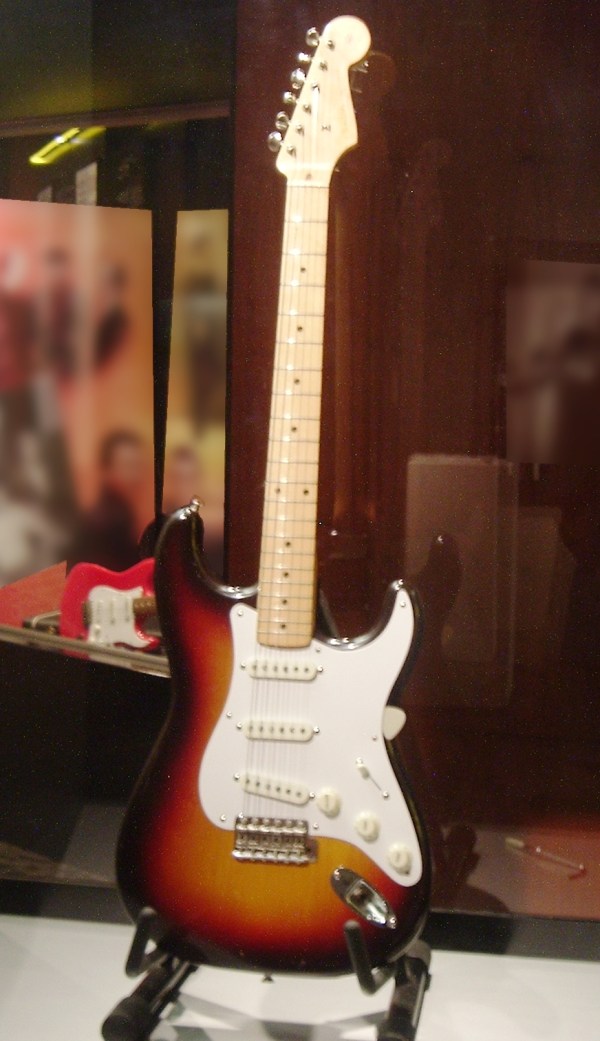
In this article, Connor Frankhouser discusses how Buddy Holly changed rock ’n’ roll and–thanks to his widow–he also changed Texas law. This new piece dives into how the legacies of our favorite artists are posthumously protected–or not–in a rapidly evolving digital landscape.
AI Discrimination: How Data Security Law Might Be the Solution
In this article, Sarah Saadeh discusses the dangers of AI biases and current regulation surrounding the area. The image for this article was AI Generated by asking the AI to give an image of a ‘stunning woman’.
If the Inventor is No Longer Human, Then What?: How the USPTO is Addressing AI Assisted Inventions
In this article, Ivette Rodriguez discusses how the USPTO is establishing a framework for patent applicants and examiners in cases where the inventor is listed as a Generative AI system in response to Executive Order 14110.
Protecting Musicians’ Sound: Tennessee’s ELVIS Act
In this article, Magaly Taylor discusses the active role of the Tennessee legislature in protecting an individual’s voice from artificial intelligence in the music industry by enacting the ELVIS Act, and the challenges in enforcing new legislation on evolving technology.
New York Times v. OpenAI: Tech Company’s Infringement on Copyright Holders
In this article, Magaly Taylor discusses The New York Times v. OpenAI case and the potential limitations this case could have on the future of AI and copyright holders.
Do Autonomous Vehicles Dream of Tort Liability?
In this article, Kyle Moodhe explains that society will confront new challenges in assessing tort liability as autonomous vehicles become more widespread. He examines competing theories of tort liability, and he assesses which theories best fit the brave new world of autonomous vehicles.