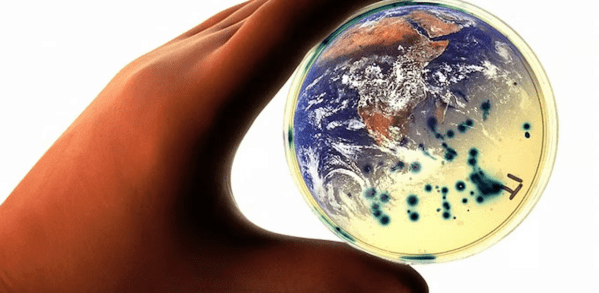
In this blog, Lana El-Etr examines the legal and ethical implications of patenting fully synthetic minimal cells, organisms engineered with only the essential genes for life. While a few Supreme Court decisions provide some guidance, this blog argues for updated patent standards that clearly define what qualifies as synthetic and patentable, guard against monopolization of foundational biological tools, and promote equitable access to medical and biotechnological advancements.
Transformative Exhibits: Fair Use as a Doctrine for Museum Displays
In this article, Jackson Weist explores the world of copyrights as it intersects with public museum exhibits, and how the fair use doctrine allows for museums to use works in exhibits without permission.
Judge-Permitting, A Way(back) to Find Online Publication Dates
In this article, Cassidy Serger discusses court treatment of the Internet Archive’s Wayback Machine in determining prior art dates in patent prosecution and review proceedings.
Dr. AI; How AI is Affecting the Medical Industry
In this article, Sarah Saadeh discusses how AI is shaking up the medical field and while helping in some processes is also causing commotion with concerns of harm to patients and breaching the duty of care, potential physician and insurance liability and what the regulatory landscape looks like right now advocates for Human-in-the-Loop regulation.
Redefining Enablement: The Impact of Amgen v. Sanofi on Patent Law and Biotechnology
In this article, Lana El-Etr examines how the Amgen v. Sanofi ruling strengthens the enablement requirement, limiting overly broad genus claims while promoting innovation and ensuring accessibility to scientific advancements. She explores the broader implications of the decision, arguing that it strikes a necessary balance between protecting genuine innovation and preventing monopolies on vaguely defined scientific concepts.