Tom Voet, Associate Member 2025-2026
Intellectual Property and Computer Law Journal
I. Introduction
Although the United States has long valued the power of free speech, some speech is considered fruitless in the marketplace of ideas—including defamation. Although defamation traditionally stood as a remedy for slander and libelous statements, recent developments in artificial intelligence illustrate the need for expanded legal redress. This blog discusses the use of Artificial Intelligence (AI) deepfakes and how these false, but realistic, depictions of individuals could be characterized as defamatory under current common law standards. Section II provides some background regarding the rise of AI deepfakes and the current status of defamation law in the United States. Section III demonstrates how defamation standards have been flexible over time, and how this flexibility could allow for a new cause of action in the context of AI deepfakes.
II. Background
The Rise of AI Deepfakes
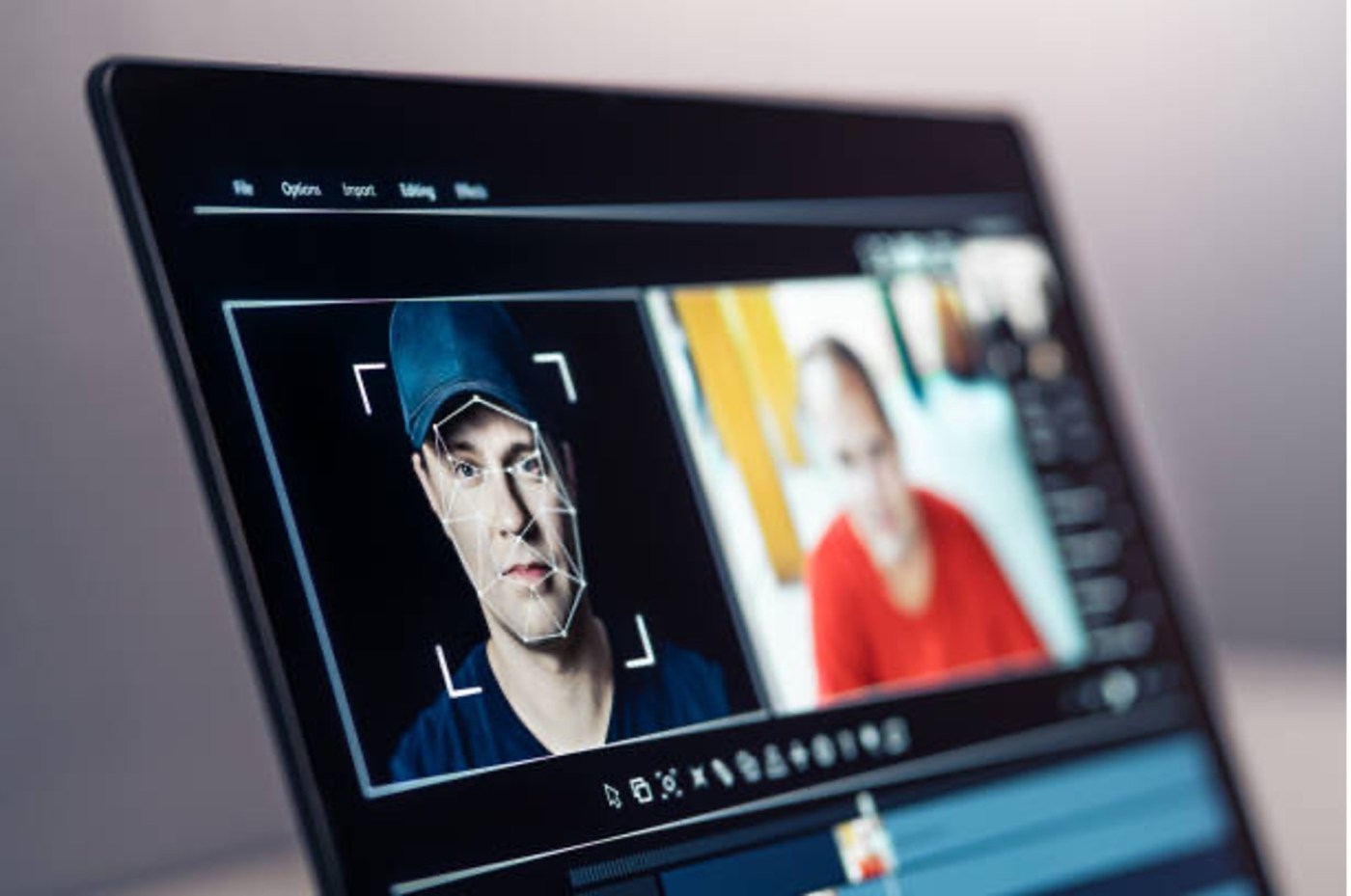
Though there have always been a number of pressing concerns in the social and political climate of the United States, the swift development of AI tools has led artificial intelligence to rise to the forefront of contemporary issues. AI now pervades classrooms,[1] workplaces,[2] and many other aspects of daily life, and its long-term impacts remain uncertain. AI deepfakes are highly realistic digital fabrications that make individuals appear to have engaged in speech or conduct they never performed, posing serious risks to reputation, privacy, and public trust. These deepfakes are often used for entertainment or parody, but the subject of these deepfakes is often featured without any form of consent or notice.[3] As deepfakes become more common, especially in political commentary, the need for legal protection against their misuse has grown increasingly clear.
During the 2024 presidential election, deepfakes entered mainstream political discourse. In the months leading to November 2024, voters observed numerous deepfakes of public figures—candidates, celebrities, and other influencers promoting a certain view or ideology. One of the more viral deepfake videos that circulated pictured Taylor Swift endorsing Trump’s presidential campaign—a position she did not support.[4] A more recent illustration of deepfakes entering the political sphere is President Trump’s Truth Social post to the October 2025’s “No Kings” protests. Here, Trump created an AI video of himself piloting an aircraft and dumping feces onto protesters in major cities.[5] Although this video was produced by the President to promote his own ideology, it illustrates the concerning trajectory of AI within political discourse.
Deepfakes present several pressing issues for our government to confront. Apart from the threat of misinformation and electoral interference, there is a serious threat of reputational harm to private citizens through widespread use of deepfakes. These problems will only snowball as time goes on. As AI continues to improve and produce sharper, more realistic depictions of false realities, our ability to distinguish between an authentic video and a deepfake will continue to wane.[6] Although the federal government has introduced some legislation to curb the more harmful uses of AI deepfakes, such as pornography, it remains unclear how the legislature will address broader AI falsifications going forward.[7] As such, courts may need to shoulder the responsibility of determining how deepfakes should be viewed under existing standards of speech.
Standards of Defamation
Under U.S. common law, defamation occurs when someone makes a false statement of fact about another person, shares it with others, and causes harm to that person’s reputation.[8] On top of this general standard, public figures must prove a mental state of “actual malice” on behalf of the party accused of defamation, as enumerated in New York Times Co. v. Sullivan.[9] In this context, “malice” is satisfied if the speaker communicated a message either with knowledge the statement was false or with reckless disregard for the veracity of the claim.[10] Sullivan posits that the First Amendment stands to protect our right to criticize the officials that govern us—and that we must be cautious of chilling speech in this context. Still, courts maintain that not all speech holds value on the marketplace of ideas, and may be prohibited without upsetting First Amendment principles. This balance, articulated by the Warren court in Sullivan, remains central to any discussion on the limits of free speech.[11] The unease brought about by contrarian viewpoints may be disconcerting at times, but it is a necessary sacrifice for the marketplace of ideas.
Courts have generally limited the definition of defamatory “statements” to be verifiable assertions of fact with either explicit or implicit factual foundation regarding a topic.[12] However, the “statement” does not necessarily need to be communicated traditionally, or through the spoken or written word, to be actionable. Courts have also treated fabricated quotations and manipulated visuals that convey false facts as causes of action under defamation law.[13] For example, in Masson v. New Yorker Magazine, the Supreme Court considered whether false quotations within a news article could be considered a defamatory statement, consistent with the traditional meaning of the term. There, the Court held that these false quotations were actionable as defamation and that the false quotes were statements that falsely attributed a viewpoint to a speaker, in a way that could cause harm to the speaker’s reputation.[14] Although truthful images or videos are generally not defamatory, liability may arise when otherwise accurate content is altered or presented in a way that implies a false and damaging message.[15]
III. Discussion
Deepfakes can satisfy the “statement of fact” element when they assert fabricated conduct or speech. When considering when an AI deepfake could potentially amount to prima facie defamation, the question becomes whether these digitally fabricated videos can amount to a “false statement of fact” as required under common law. Although defamation traditionally covers written or spoken communications, a court will focus on the nature of a communication in addition to the medium by which it was delivered.[16] A deepfake video depicting a person saying or doing something they never did clearly communicates a factual claim about that person’s conduct, similar to the false quotations highlighted by the Court in the Masson case.[17] Masson illustrates that not all defamatory statements may appear the same and that even some communications may operate within a grey area of a factual assertion. It is within this grey area that the courts may be able to manufacture some cause of action against a harmful or slanderous deepfake.
A court could treat an AI deepfake as an implied assertion of fact if a reasonable viewer would understand the fabricated content as depicting real events rather than satire or fiction.[18] Courts have recognized that visuals or edited media can meet the threshold of a “statement” when the media misrepresents reality in a way that would cause a reasonable viewer to believe it to be true. Under this reasoning, an AI-generated depiction of an individual engaging in criminal or immoral behavior could potentially satisfy the “false statement” element of defamation, particularly if it is distributed widely on social media in a way that clearly causes some kind of harm.
The anonymity of the internet makes it difficult to identify the creators of harmful AI content, but concerns about enforcement should not deter modernization efforts of defamation law to address these new challenges.[19] The subject matter of AI deepfakes is often public figures, meaning defamatory deepfakes could face scrutiny under the “actual malice” standard.[20] Currently, it can be extremely difficult to prove a party acted with actual malice in producing a libelous or slanderous statement about another person, but in the context of AI materials, this standard may look different.[21] Where defendants create or knowingly disseminate fabricated media, plaintiffs may more readily prove knowledge of falsity or the reckless regard standard established in Sullivan. But still, the courts may want to apply the idea of Sullivan more indirectly and may take a more liberal outlook on the use of AI deepfakes.
While the First Amendment protects robust criticism of public officials, courts must consider whether this protection extends to deliberate misinformation and the false portrayals made possible by modern AI tools. This leaves questions regarding whether AI deepfakes are protected speech under the First Amendment, or actionable as defamatory speech.
IV. Conclusion
If the government hopes to constrain the dangers of AI, they must act proactively and establish safeguards before further harm occurs. AI deepfakes pose a significant threat to private actors, and to the broader public, in their ability to portray false realities. It is crucial that courts begin to recognize harmful deepfakes as actionable under defamation law when the relevant elements are met. Without some kind of actionable standard from the courts, and without legislation from Congress, deepfakes will continue to cause increasing amounts of harm.
[1] See Alexandra Adair et al., New Research: Majority of High School Students Use Generative AI for Schoolwork, CollegeBoard (Oct. 6, 2025), https://newsroom.collegeboard.org/new-research-majority-high-school-students-use-generative-ai-schoolwork [https://perma.cc/QZ6L-DNX2] (finding that 84% of high school students used generative AI for schoolwork between January and May 2025).
[2] See Marjorie Richter, How AI is transforming the legal profession, Thomson Reuters (Aug. 18, 2025), https://legal.thomsonreuters.com/blog/how-ai-is-transforming-the-legal-profession/ [https://perma.cc/P6H3-V34X] (“80% of respondents believe AI will have a high or transformational impact on their work within the next five years”).
[3] See Deni Ellis Béchard, Jake Paul’s Sora Stunt Previews Risks and Rewards of a Deepfake Marketplace, Scientific American (Oct. 16, 2025), https://www.scientificamerican.com/article/jake-pauls-deepfake-gambit-sparks-debate-over-sora-cameos-and-digital/ [https://perma.cc/G32R-26AP].
[4] Derek B. Johnson, Taylor Swift cites AI-generated images from Trump campaign in Harris endorsement, Cyberscoop (Sep. 11, 2024), https://cyberscoop.com/taylor-swift-ai-deepfake-trump-post-kamala-harris-endorsement/ [https://perma.cc/JCB6-YEWZ].
[5] Allan Smith, Trump Posts AI Video Dumping No Kings Protestors, NBC News (Oct. 19, 2025), https://www.nbcnews.com/politics/donald-trump/trump-posts-ai-video-dumping-no-kings-protesters-rcna238521 [https://perma.cc/R4XV-BM5T].
[6] David Klepper, Creating realistic deepfakes is getting easier than ever. Fighting back may take even more AI, Associated Press (July 28, 2025), https://www.ap.org/news-highlights/spotlights/2025/creating-realistic-deepfakes-is-getting-easier-than-ever-fighting-back-may-take-even-more-ai/ [https://perma.cc/65PK-6ZLD].
[7] Tools to Address Known Exploitation by Immobilizing Technological Deepfakes on Websites and Networks Act, Pub. L. No. 119-12, 139 Stat. 55 (2025).
[8] Restatement (Second) of Torts § 558. (defining “defamation” as (1) a false statement, (2) purporting to be factual, (3) that is published or communicated to a third party in a negligent or malicious manner, (4) that results in harm to the reputation of the subject of the statement, or other damages).
[9] New York Times Co. v. Sullivan, 376 U.S. 254, 280 (1964).
[10] Id. at 280.
[11] Id. at 282.
[12] Houlahan v. Freeman Wall Aiello, 15 F. Supp. 3d 77, 83 (D.D.C. 2014).
[13] Stanton v. Metro Corp., 438 F.3d 119 (1st Cir. 2006).
[14] Masson v. New Yorker Mag., Inc., 501 U.S. 496, 511 (1991).
[15] Id.
[16] Id. at 513 (discussing how the injurious nature of the false quotations, in addition to their presentation in a nonfiction journal, made them defamatory).
[17] Id. at 524 (holding that fabricated quotations are actionable when the alteration ‘materially alters’ the meaning of what was said and how the same principle applies to deepfake audio or visual fabrications that similarly distort a person’s real speech or conduct).
[18] See Milkovich v. Lorain Journal Co., 497 U.S. 1, 21 (1990) (holding that statements implying an assertion of objective fact can be actionable when a reasonable reader would interpret them as such); White v. Fraternal Order of Police, 909 F.2d 512, 520-23 (D.C. Cir. 1990) (explaining that even opinions may imply false facts if a reasonable reader could interpret them that way).
[19] See Tina Brooks et al., Increasing Threat of Deepfake Identities, Department of Homeland Security, https://www.dhs.gov/sites/default/files/publications/increasing_threats_of_deepfake_identities_0.pdf [https://perma.cc/XUK2-ZVWC] (last visited Dec. 3, 2025).
[20] See Teddy Grant, Taylor Swift, Tom Cruise, and Scarlett Johansson top list of deepfaked stars, The Hill (Nov. 21, 2021), https://thehill.com/policy/technology/5617176-top-deepfaked-celebrities-mcafee/ [https://perma.cc/MAA8-WM5A].
[21] See Jacobs v. Frank, 60 Ohio St. 3d 111, 115 (1991) (“Public official actual malice requires more than evidence of ill will, spite, or ulterior motive; the libeled plaintiff must prove with convincing clarity that the defendant had a high degree of awareness of the probable falsity of the published statements”).


Leave a Reply