Wil Schuehler, Associate Member 2025-2026
Intellectual Property and Computer Law Journal
I. Introduction
Nike is one of the most recognizable sneaker brands in the world and is often forced to confront smaller entities who attempt to profit off its carefully curated brand image and distinctive designs. As the sneaker resale market expands and customization becomes increasingly popular, Nike has been compelled to pursue trademark infringement claims to protect its designs. While doing this, the company also risks stifling the innovation of customizers and resellers with its broad enforcement efforts.
This blog explores Nike’s trademark infringement claims against sneaker resellers and further discusses the ever-changing landscape of trademark enforcement and consumerism freedom. Part II examines relevant trademark infringement law, the sneaker resale and customization business, and Nike’s recent enforcement actions. Part III discusses the strengths, weaknesses, and unresolved questions of Nike’s trademark strategy. Finally, Part IV concludes by recognizing the unsettled balance between Nike’s trademark enforcement and secondary markets.
II. Background: Trademark Law and Sneaker Resale
Trademark Law and Brand Protection
There are several pertinent trademark law doctrines that Nike and secondary market participants utilize when it comes to infringement actions, the most prominent being the Lanham Act. Enacted by Congress in 1946. The Lanham Act provides a national system for trademark registration and protects the owners of federally registered marks against the use of similar marks that are likely to cause consumer confusion or dilution of the mark.[1] In order to be eligible for trademark protection, the mark must be distinctive and used in commerce.[2] For a trademark infringement claim to be successful, the registered mark must have a valid and legally protectable mark, the mark must be owned by the plaintiff, and the defendant’s use of the mark must cause a likelihood of confusion.[3]
The second key trademark law doctrine is the first sale doctrine, which was established under 17 U.S. Code § 109(a).[4] This doctrine allows the owner of a particular physical copy of a copyrighted good to sell or otherwise dispose of the possession of that copy without the authority of the copyright holder.[5] It also allows the resale of trademarked products without the owner’s permission.[6] However, the first sale doctrine does not apply when the resold goods are materially different from those sold by the trademark owner.[7]
The third pertinent trademark law doctrine is fair use, which is primarily invoked by defendants in response to trademark infringement allegations.[8] It includes both classic fair use and nominative fair use.[9] Classic fair use, codified in 15 U.S. Code § 1115(b)(4), allows a party to use another’s trademark in its primary descriptive meaning.[10] In contrast, nominative fair use allows the defendant to use the plaintiff’s mark to accurately describe the plaintiff’s product, even if defendant’s purpose was to describe their own product.[11] Essentially, nominative fair use is a legal defense to infringement claims, but only when necessary to identify their product or service through means of comparison or reference to the plaintiff’s own mark.[12] One caveat of nominative fair use is that the defendant is prohibited from doing anything with the trademark that would suggest sponsorship or endorsement by the trademark owner.[13]
Sneaker Resale and Customization
According to BullFincher research, Nike is the largest global footwear company in the world.[14] It owns trademarks for the iconic swoosh, the NIKE logo, the Air Jordan “Wings” logo, the Jumpman logo, and many more.[15] These registered trademarks give Nike exclusive rights to use these marks in commerce.[16]
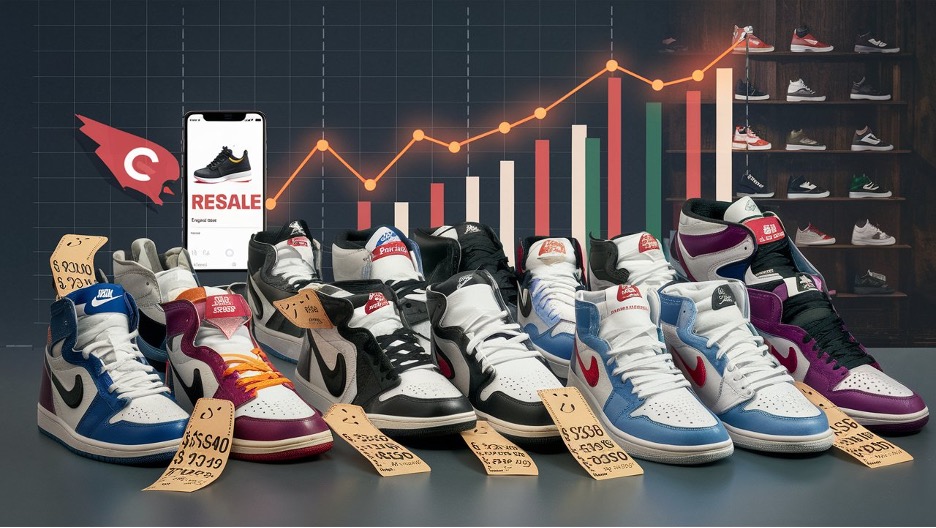
The resale market, led by popular platforms such as GOAT and StockX, facilitate the buying and selling of in-demand sneakers.[17] Often, resale prices exceed retail, allowing consumers to purchase otherwise difficult to obtain sneakers—some of which are priced at more than 1200% of the retail price.[18] As of 2023, StockX has traded 50 million items and reached 15 million lifetime buyers and 1.7 million lifetime sellers.[19] In such prominent resale markets, questions of trademark infringement are inevitable.
Customization of sneakers presents another problem. Independent creators take popular Nike shoes and put their artistic spin on them, creating one-of-a-kind designs in order to sell them at higher prices.[20]However, customization can lead to trademark infringement if the modified shoe creates a likelihood of consumer confusion regarding Nike’s involvement.[21] From Nike’s perspective, the company is not inherently opposed to customization; however, it cannot tolerate the risk of brand dilution and consumer confusion that such practices may create.[22] This ongoing tension between brand protection and artistic freedom has led to enforcement action by the shoe mogul, Nike.[23]
Nike’s Trademark Enforcement History
Nike’s actions against StockX and the Shoe Surgeon illustrate the company’s trademark defense strategies. In February 2022, Nike filed suit against StockX, alleging trademark infringement, counterfeiting, and false advertising.[24] According to Nike, StockX was offering non-fungible tokens (“NFTs”) that made prominent use of Nike’s trademarks and likely misled consumers to believe that Nike authorized the NFTs.[25] The NFTs were digital sneaker tokens that corresponded to physical sneakers in the StockX vault with a “100% authenticity guarantee.”[26] Additionally, despite StockX’s authenticity guarantee, Nike claimed that StockX was liable for false advertising and counterfeiting because StockX had distributed 37 pairs of fake sneakers.[27] The court found StockX liable for the counterfeited sneakers, and the trademark infringement claims involving the NFTs were privately settled.[28]
The legal tension lies in the uncertainty of how far the first sale doctrine and fair use defenses extend. Resale activities may constitute infringement when the seller materially alters the product, uses the trademark in a way that suggests Nike endorsement, or creates a new product.[29] StockX and others can typically rely on the nominative fair use doctrine to defend against claims of infringement by arguing that the reseller must use Nike’s logo to describe the Nike product for sale.[30] However, when StockX created NFTs utilizing Nike’s trademark and guaranteed authenticity, it seemingly exceeded the bounds of the fair use and first sale doctrines and became a new unauthorized product.
As for another trademark enforcement action, Nike filed suit in July 2024 against Dominic Ciambrone, professionally known as the “Shoe Surgeon.”[31] The Shoe Surgeon is a popular sneaker customizer who has customized shoes for celebrities like LeBron James, Justin Bieber, Drake, and others.[32] The one-of-a-kind customizations he creates can cost upward of $100,000.[33] In the suit, Nike alleged trademark infringement, counterfeiting, dilution, unfair competition, and other claims.[34] The Shoe Surgeon raised the first sale doctrine and fair use as defenses and argued that his customized sneakers were lawfully purchased Nike products that were transformed through artistic expression and non-commercial meaning.[35]Ultimately, the case was privately settled, but the Shoe Surgeon is said to have paid Nike an undisclosed amount of money and is now limited to customizing Nike sneakers only in special circumstances.[36] The outcome of this case illustrates the tension between brand protection and artistic freedom.[37]
III. Discussion
Strengths of Nike’s Enforcement
Nike’s enforcement strategy exemplifies the company’s ability to leverage trademark law to safeguard its brand. In both cases, Nike utilized the Lanham Act to enforce its brand’s trademarks.[38] In the StockX case, Nike successfully protected its marks involving the counterfeit shoes and false advertising that led to consumer confusion. Furthermore, Nike was also able to put a halt to the creation and sale of StockX’s NFTs that blurred the line between resale and unauthorized product creation.[39] This outcome is an example of how trademark law can be used to maintain control over brand image and prevent unauthorized exploitation of brand name.
Moreover, the litigation between Nike and the Shoe Surgeon illustrates the company’s success in preventing product dilution and consumer confusion. The customized shoes ran the risk of implying nonexistent collaborations, undermining Nike’s curated image, and leading consumers to believe the customizations were authorized or affiliated with Nike.[40] After settlement, the Shoe Surgeon was permitted to customize Nike trademarks only with express written permission, and the unauthorized sale of Nike-based customs is now prohibited.[41] Further, the Shoe Surgeon’s custom work must be produced in a way that removes or heavily alters any recognizable Nike intellectual property.[42]
These two cases exemplify the utility of trademark infringement law in safeguarding brand identity, protecting Nike’s trademarks and reinforcing consumer trust. They also highlight Nike’s aggressive enforcement which deters smaller actors from testing the boundaries of resale and customization.[43]
Limitations and Challenges of Enforcement
While Nike has extensively sought to protect its trademarks, its enforcement record also demonstrates the limitations of current trademark law. Most notably, the primary constraint deals with the first sale doctrine. This doctrine grants resellers and customizers a lawful defense when reselling.[44] Resale platforms such as StockX and GOAT can profit off the demand for limited Nike sneaker releases while claiming first sale doctrine protection.[45] So long as the following conditions are met, resellers can be shielded from liability: the initial purchase of the Nike shoes is authorized, the reseller does not give a false impression of sponsorship, and the reseller does not materially alter the good.[46] This doctrine hinders Nike’s ability to police activity in the secondary market, as most resellers can assert that their operations are lawful under the first sale doctrine.[47] Applying this doctrine raises additional questions such as what constitutes a material difference and what gives rise to a false impression of sponsorship.[48]
Another limitation within the trademark space is the tendency to settle. As seen from the StockX and Shoe Surgeon cases, Nike is open to negotiating settlements.[49] As a result, there is no clear precedent for similar cases, allowing resellers and customizers to take advantage of ambiguities that have not been clearly resolved.[50]
Limitations also arise from the sheer number of infringement claims, making it nearly impossible for large companies like Nike to pursue them all.[51] Smaller resellers and customizers may also be able to slip through the fingers of Nike’s enforcement, which can lead to inconsistent enforcement and potential fairness concerns.[52] Altogether, these limitations can heavily complicate trademark enforcement efforts.
Uncharted Territory: Balancing Brand Protection and Market Innovation
Nike’s enforcement cases reveal unsettled questions of trademark law in fast-developing markets. Courts are now grappling with issues such as how NFTs tied to physical sneakers should be treated under trademark law, whether drastic customization falls within trademark doctrines such as first sale or fair use, and whether sponsorship is implied when resell platforms offer authenticity guarantees.
Courts have not yet reached a consensus about how these traditional doctrines mix with the new age of secondary markets and customization.[53] While the doctrines are critical in protecting brands and innovation, they can be difficult to apply to emerging contexts. Moreover, with many of these cases being settled confidentially, brands are being forced to navigate the gray area of the law. This uncertainty not only makes the application of trademark law more difficult but also invites debate over the extent of its protection. On one hand, robust enforcement preserves the integrity of Nike’s marks, ensures consumer trust, and protects brand image. On the other hand, chilling artistic freedom can hinder the secondary market, undermine the very creativity that helped shape sneaker culture in the first place, and limit legitimate resale business.[54]
Moving forward, more explicit guidance is needed regarding how traditional trademark law principles apply in the context of secondary markets and new technologies, especially as innovation and trademark enforcement increasingly collide. As the cases above illustrate, there is no set path, and it will take time to navigate. Nevertheless, courts will soon need to draw clear lines that can balance brand control and heavy trademark enforcement against artistic and consumer freedom.
IV. Conclusion
Nike’s enforcement strategy demonstrates both the strength and fragility of modern trademark law. It is powerful enough to defend one of the most recognizable brands, while at the same time it is limited in its ability to evolve with emerging technological realities that shape how consumers buy, sell, and reimagine products today.
[1] Lanham Act, 15 U.S.C. §§ 1051-1127.
[2] Id.
[3] Id.
[4] Limitations on Exclusive Rights: Effect of Transfer of Particular Copy or Phonorecord, 17 U.S.C. § 109 (2018).
[5] Id.
[6] Id.
[7] Hannah Brown Goehring, First Sale Doctrine Limitations: Key Trademark Law Considerations for Businesses, Gordon Rees Scully Mansukhani (Jan. 2025), https://www.grsm.com/insight/first-sale-doctrine-limitations-key-trademark-law-considerations-for-businesses/ [https://perma.cc/9B7G-XSFY].
[8] Registration on Principal Register as Evidence of Exclusive Right to Use Mark; Defenses, 15 U.S.C. § 1115 (2018).
[9] Maria Crimi Speth & Aaron K. Haar, Fair Enough: The “Fair Use” Defense to Trademark Infringement, Jaburg Wilk Law Firm, https://www.jaburgwilk.com/news-publications/fair-enough-the-fair-use-defense-to-trademark-infringement [https://perma.cc/BUD3-DCAC] (last visited Oct. 14, 2025).
[10] 15 U.S.C. § 1115.
[11] Ninth Cir. Trademark Jury Instr. – Civ. § 15.25 (Sept. 2025), https://www.ce9.uscourts.gov/jury-instructions/node/251 [https://perma.cc/MT6W-XE3M].
[12] Id.
[13] Id.
[14] Largest Global Footwear Companies by Revenue, Bullfincher, https://bullfincher.io/ranking/top-footwear-companies-in-the-world-by-revenue [https://perma.cc/K5YR-SFAG].
[15] Nike, Inc. Trademarks, Justia, https://trademarks.justia.com/owners/nike-inc-47066/page2 [https://perma.cc/ZDQ3-T5ZF].
[16] Id.
[17] Riley Jones et al., The Best Sneaker Resale Sites Right Now, Complex (Jan. 7, 2025), https://www.complex.com/sneakers/a/riley-jones/best-sneaker-reseller-sites [https://perma.cc/C8JB-522W].
[18] Alex Ocho, Travis Scott X Fragment Air Jordan 1 Low Sail Military Blue is Reselling for Thousands, Complex (Sept. 23, 2025), https://www.complex.com/music/a/alex-ocho/travis-scott-x-fragment-air-jordan-1-low-sail-military-blue-resell.
[19] StockX’s Annual Report Reveals Top-Traded and Fastest-Growing Brands, Predictions for 2024, StockX (Jan. 17, 2024), https://stockx.com/about/stockxs-annual-report-reveals-top-traded-and-fastest-growing-brands-predictions-for-2024/.
[20] The Shoe Surgeon, Highsnobiety, https://www.highsnobiety.com/tag/the-shoe-surgeon/ [https://perma.cc/3FEN-XKW8] (last visited Oct. 4, 2025).
[21] See Lanham Act, 15 U.S.C. §§ 1051–1127 (2018).
[22] Jodyann Galvin et al., Protecting the Swoosh: Sneaker Giant’s Settlement Restricts Customization, Hodgson Russ LLP(Aug. 12, 2025), https://www.hodgsonruss.com/newsroom/publications/protecting-the-swoosh-sneaker-giants-settlement-restricts-customization [https://perma.cc/NKG5-54FV].
[23] Id.
[24] Nike v. StockX: A Timeline Behind the Trademark Lawsuit, The Fashion L. (Aug. 29, 2025), https://www.thefashionlaw.com/nike-v-stockx-a-timeline-behind-the-trademark-lawsuit/ [https://perma.cc/8YKM-GHTA].
[25] Id.
[26] Id.
[27] Id.
[28] Id.
[29] Goehring, supra note 7.
[30] Nike v. StockX, supra note 24.
[31] Galvin, supra note 22.
[32] Highsnobiety, supra note 20.
[33] Id.
[34] Galvin, supra note 22 (Shoe Surgeon acknowledged customization using third-party materials violated the Lanham Act).
[35] Nike Inc. v. S2, Inc., No. 1:24-cv-05307 (S.D.N.Y. Nov. 18, 2024), ECF No. 36, https://www.courtlistener.com/docket/68942784/36/nike-inc-v-s2-inc/ [https://perma.cc/WUE2-VGMQ].
[36] The Shoe Surgeon and Nike Reach Settlement in Trademark Battle, Complex (June 20, 2025), https://www.complex.com/sneakers/a/abel-shifferaw/the-shoe-surgeon-nike-settlement-trademark-battle-damages-money [https://perma.cc/DMZ4-6BR7].
[37] Galvin, supra note 22.
[38] Galvin, supra note 22; Nike, Inc. v. StockX LLC, No. 1:22-cv-00983 (S.D.N.Y. Apr. 24, 2024), https://law.justia.com/cases/federal/district-courts/new-york/nysdce/1:2022cv00983/574411/250/ [https://perma.cc/5LDA-PHLR].
[39] NFTs, StockX, https://stockx.com/category/nfts (last visited Oct. 4, 2025).
[40] Elise Cant, Nike Cracks Down on The Shoe Surgeon’s Unauthorized Modifications of Nike Branded Shoes, Marks & Clerk(Aug. 1, 2024), https://www.marks-clerk.com/insights/latest-insights/102jf75-nike-cracks-down-on-the-shoe-surgeon-s-unauthorised-modifications-of-nike-branded-shoes/ [https://perma.cc/2P5N-EC8A].
[41] Mason Cash, Nike Ends Legal Dispute with The Shoe Surgeon, Paves Way for Limited Custom Work, Stupid Dope (June 21, 2025), https://stupiddope.com/2025/06/nike [https://perma.cc/BQR9-KE54].
[42] Id.
[43] Inside Nike’s Global Trademark Strategy: Protecting the Swoosh, The Fashion Law (Aug. 8, 2025), https://www.thefashionlaw.com/inside-nike-global-trademark-strategy [https://perma.cc/BC8M-2FXN].
[44] Goehring, supra note 7.
[45] Id.
[46] Id.
[47] Id.
[48] Id.
[49] Nike v. StockX, supra note 24; Complex, supra note 36.
[50] Nike v. StockX, supra note 24.
[51]Trademark Violation Examples, Adibi IP Group (July 31, 2025), https://adibiip.com/trademark-violation [https://perma.cc/2VQA-NZKY].
[52] Austin Juarez et al., IP Rights Enforcement in Online Marketplaces, J. Int’l Com. L. & Tech. 4(1), 48-50 (2023), https://jiclt.com/article/ip-rights-enforcement-in-online-marketplaces-27/ [https://perma.cc/PN8D-NBMA].
[53] Nike v. StockX, supra note 24; Nike Inc. v. S2, Inc., supra note 35.
[54] Mason Cash, supra note 41.


Leave a Reply